
Photography by Joshuan J. Barboza
https://www.instagram.com/mambastreetphoto/
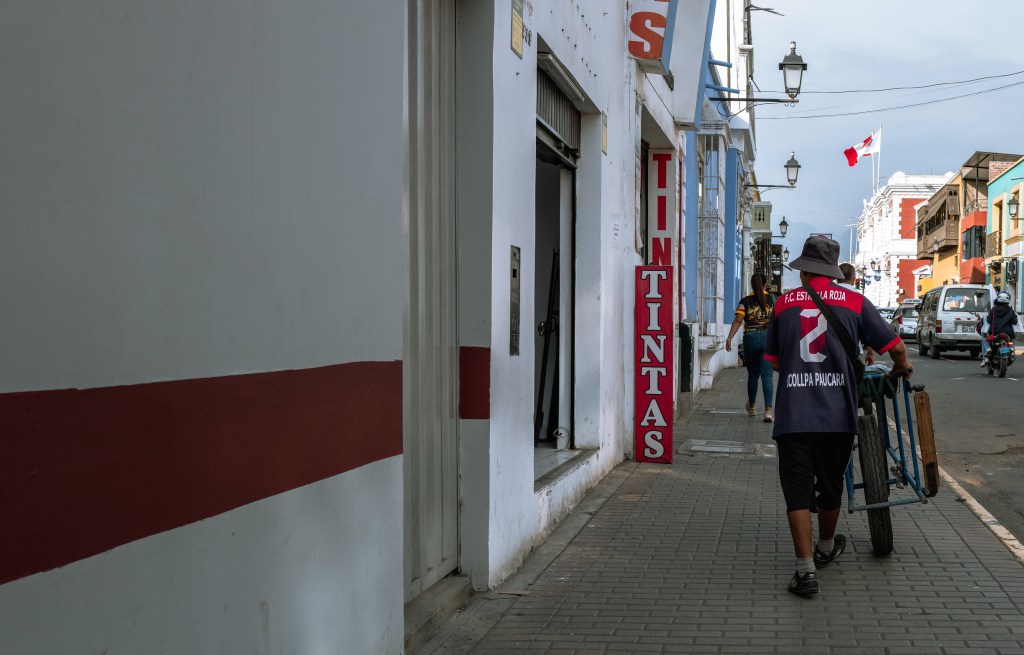
Morning in Trujillo does not arrive abruptly; it unfolds gradually across walls of ochre, blue, and fading white. The city wakes through motion rather than noise. A man pushes a metal cart along the sidewalk, his steps slow but deliberate, tracing a route repeated countless times before. Behind him, the facades of colonial houses stretch into the distance like quiet witnesses to the everyday choreography of the street.
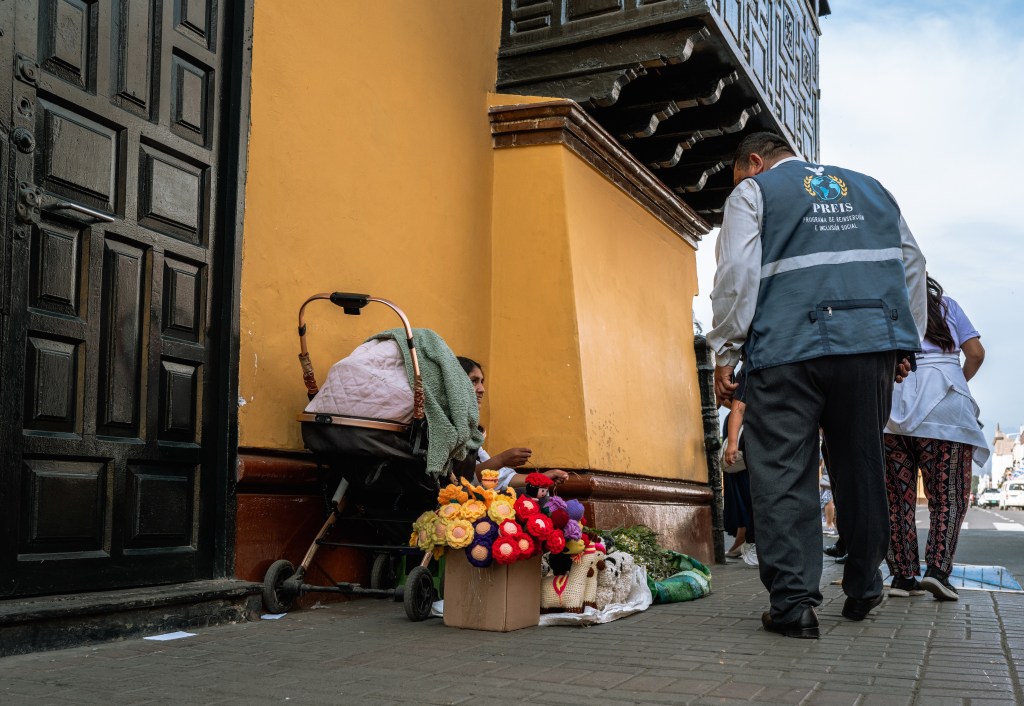
Along another corner, a woman sits beside a doorway selling handmade flowers. The colors are vivid against the aged walls—reds, yellows, purples carefully arranged in a box that becomes both shop and livelihood. Passersby move without stopping, yet the small display holds its place in the rhythm of the street, a quiet assertion that life persists in the simplest gestures of work.
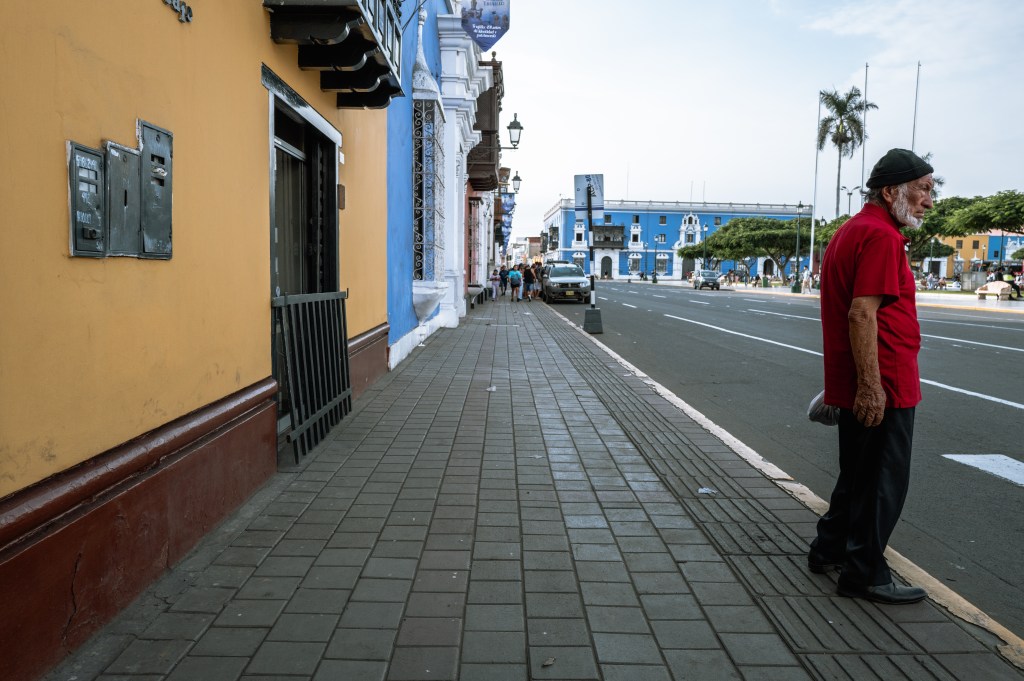
Further down the avenue, an elderly man pauses at the curb. His figure is framed by the wide emptiness of the pavement and the distant geometry of colonial buildings. The moment feels suspended: a brief hesitation between past and present, between memory and the city’s constant forward movement.
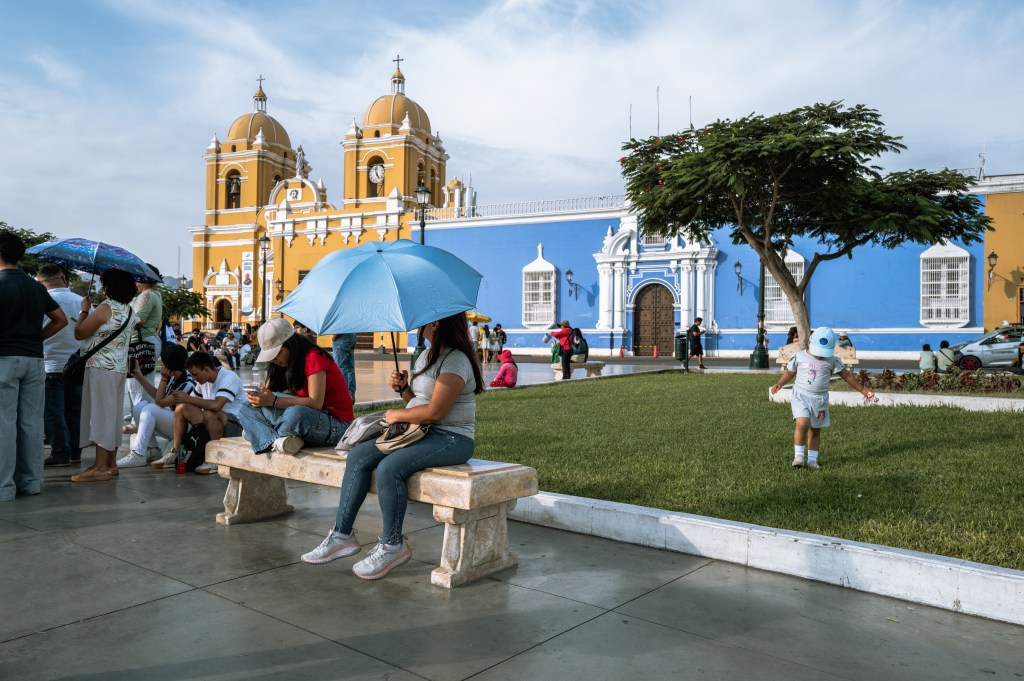
In the Plaza de Armas, the atmosphere changes. The cathedral rises in bright colors, its domes glowing under the afternoon light. People gather on benches, rest under umbrellas, check their phones, and watch the flow of visitors. Children wander across the grass with the careless freedom of those who have not yet learned the weight of time.
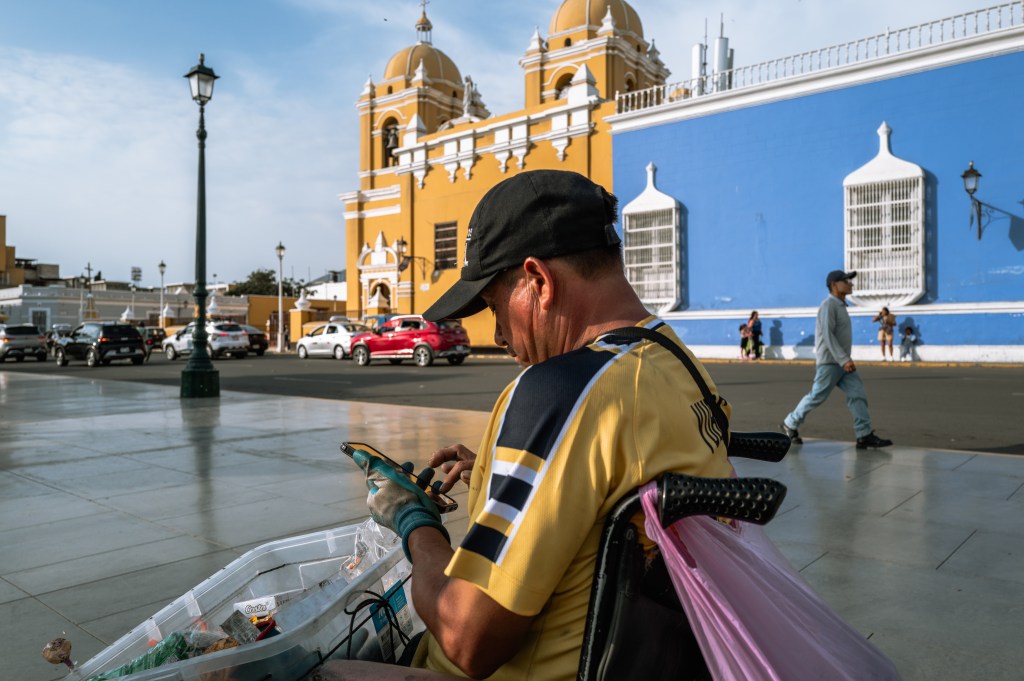
Not far away, another vendor sits beside a small plastic container filled with sweets. His hands move carefully, selecting each item while the late sun casts long shadows across the square. Behind him, the cathedral walls—painted in yellow and blue—stand both monumental and intimate, part of the landscape yet deeply woven into the lives unfolding before them.
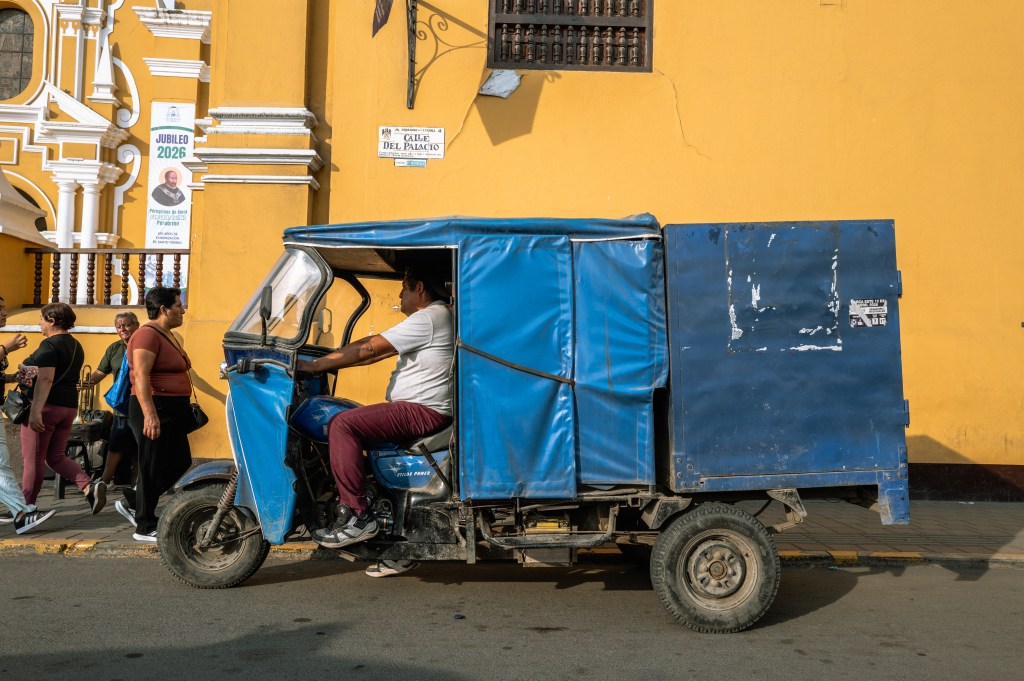
The street continues its quiet theater. A blue mototaxi passes along a mustard-colored wall, its engine briefly interrupting the calm. Pedestrians cross the frame, each carrying an invisible narrative—errands, conversations, fatigue, hope.
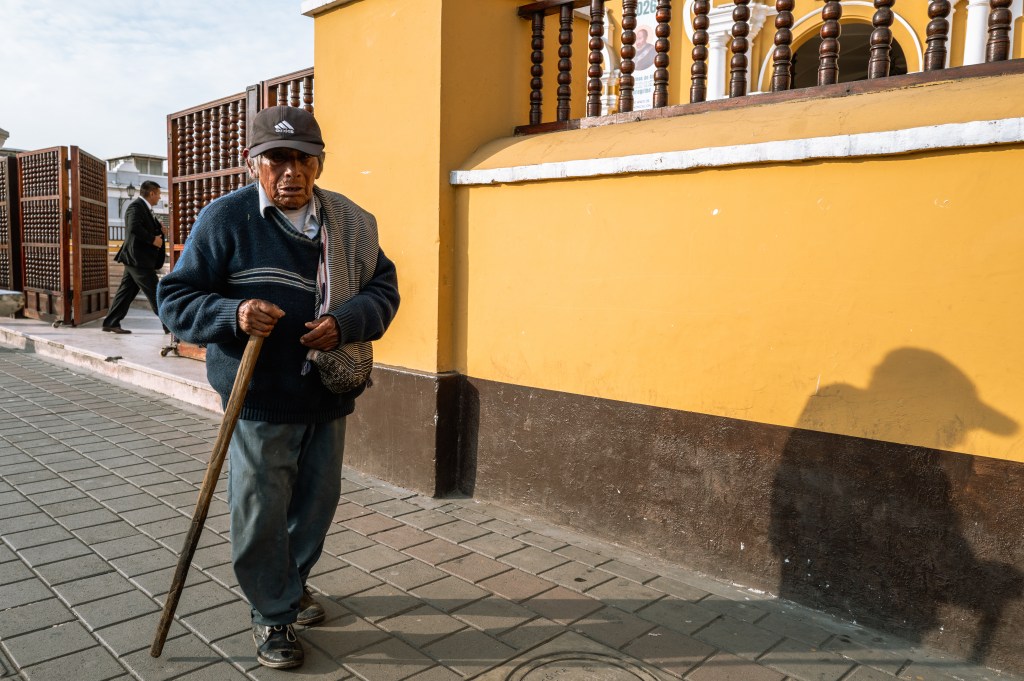
Then there is the solitary figure of an old man walking with a wooden cane. His shadow stretches across the pavement, elongated by the descending sun. In that shadow resides an entire lifetime: decades of footsteps taken along these same streets.
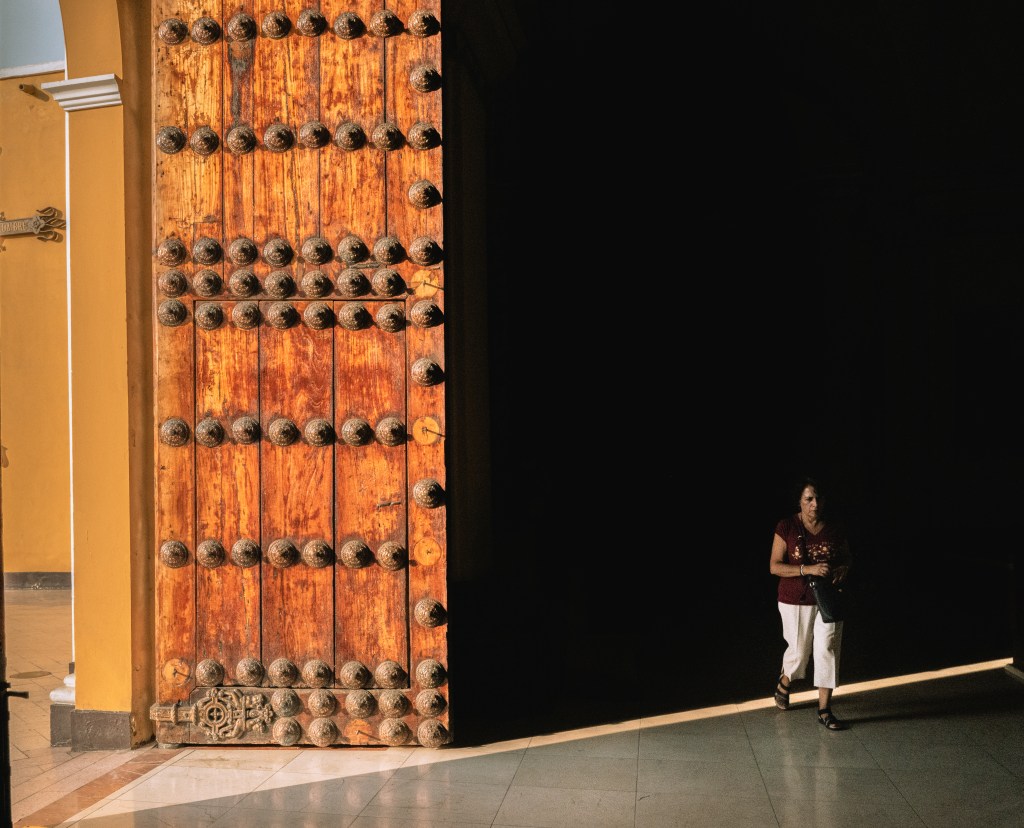
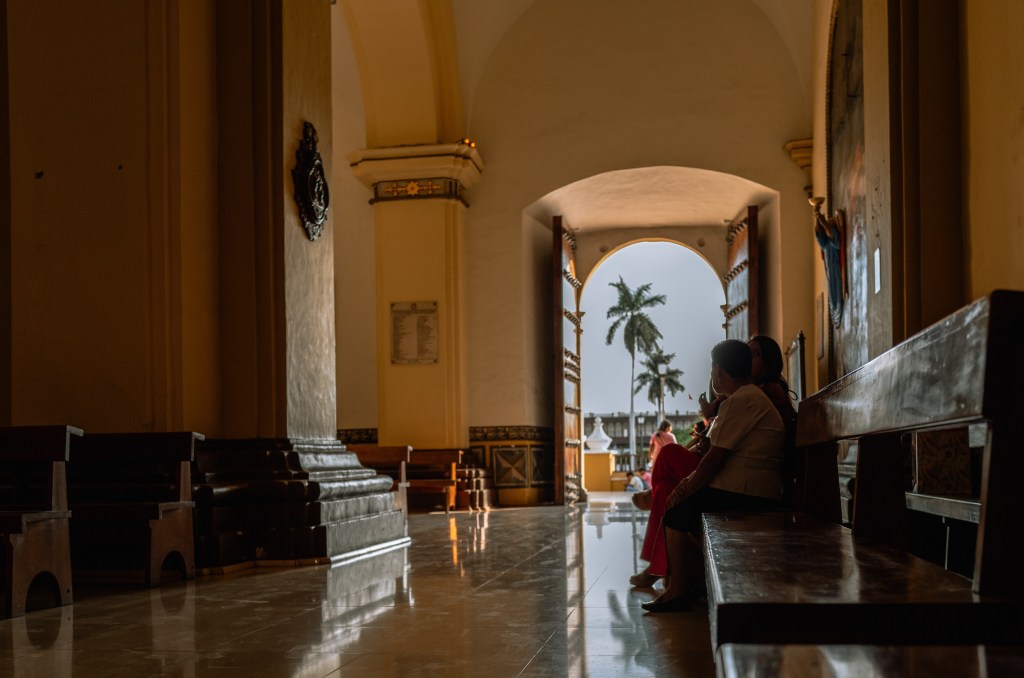
Inside the cathedral, the atmosphere changes once again. A massive wooden door stands open, dividing light from darkness. Outside, palm trees sway under the coastal sky; inside, the silence carries a different kind of movement—reflection, prayer, waiting. Two figures sit quietly on a bench, suspended between the sacred calm of the interior and the restless life beyond the threshold.
Together, these scenes form a fragmented portrait of Trujillo. Not the monumental city described in guidebooks, but the lived city—where history is carried not by buildings alone, but by the anonymous gestures of those who inhabit its streets each day.
Here, the extraordinary does not lie in spectacle.
It resides in repetition, in patience, in the slow persistence of ordinary lives moving through light.
 Peru Street Photography
Deja un comentario